
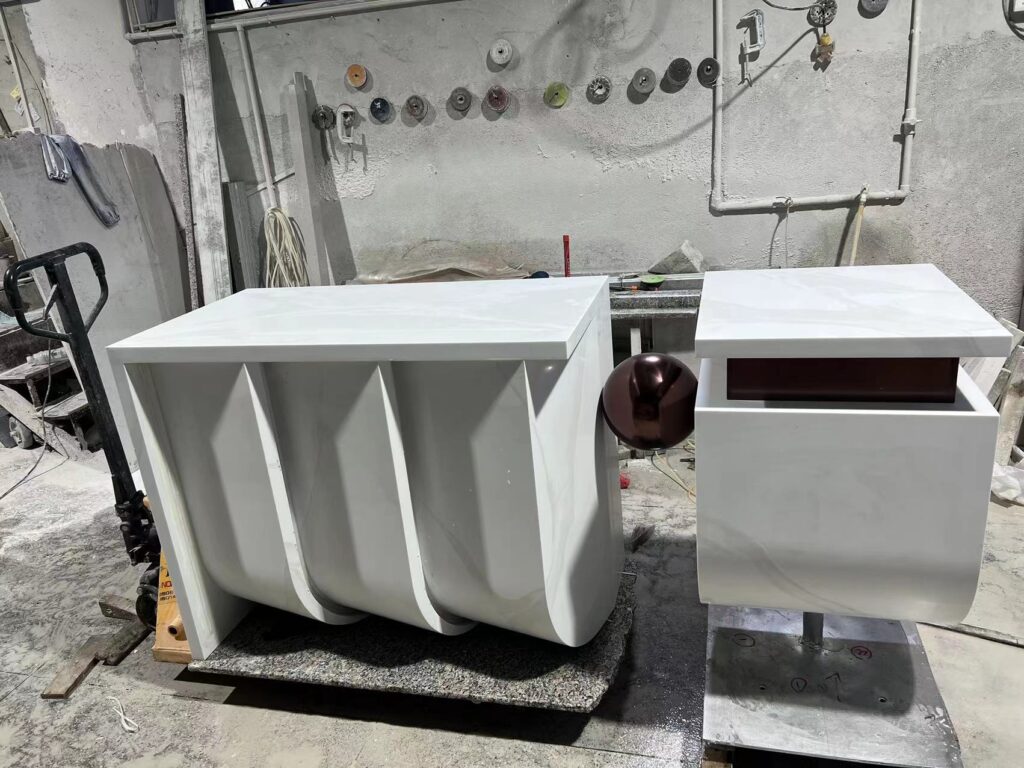
As a leading custom component manufacturer based in Melbourne, Melbourne Creative Group (MCG) is proud to support Australian architects and architectural firms. Backed by over 30 years of engineering and construction expertise from China’s Chuangxiang Group, we specialise in delivering bespoke, high-quality building materials tailored to the unique demands of residential, commercial, and industrial projects across Australia.
Our deep understanding of the local market allows us to anticipate and fulfil the needs of architects who seek innovative, durable, and design-led solutions. In this article, we explore some of the most commonly requested fixtures and fabrication products by Australian architects, drawing on our extensive experience in custom procurement and manufacturing.
Surface Finishes: Enhancing Aesthetics and Durability
Australian architects frequently prioritise surface finishes that balance visual appeal with resilience against our harsh climate, think intense UV exposure, coastal salt spray, and variable weather patterns. At MCG, we see high demand for materials like microcement, which offers a seamless, industrial-chic look ideal for modern interiors and exteriors. Timber-look aluminium panels are another favourite, providing the warmth of natural wood without the maintenance issues, making them perfect for sustainable residential facades or commercial fit-outs.
Other popular options include cork and PVC wood panels for eco-friendly acoustic treatments, and custom wallpaper for branded commercial spaces. These finishes are often requested for their versatility in achieving textured, layered surfaces that align with contemporary Australian design trends, such as biophilic elements that integrate indoor and outdoor spaces.
Metal-Based Elements: Strength Meets Style
Metal fixtures remain a staple in architectural requests due to their structural integrity and customisability. Stainless steel components, such as balustrades, handrails, and cladding, are commonly sought for their corrosion resistance, which is essential in Australia’s coastal regions. Corten steel, with its distinctive weathered patina, is increasingly popular for landscape features and public art installations, adding a rustic yet modern edge to urban developments.
Perforated metal panels are frequently specified for shading systems or privacy screens, allowing architects to control light and airflow while creating intricate patterns. Custom signage fabricated from metals also sees strong demand, particularly for commercial projects where branding integration is key. At MCG, we ensure these elements are precision-engineered to meet Australian standards, offering perforated designs that enhance both functionality and aesthetic impact.
Hybrid Composites: Innovation for Complex Projects
For architects tackling ambitious designs, hybrid composites provide the flexibility needed for innovative structures. Sintered stone slabs are a top request for benchtops, flooring, and wall cladding, valued for their durability and low-maintenance properties in high-traffic areas like hospitals or retail centres. Polycarbonate sheets and honeycomb panels are often used in lightweight roofing or partitioning systems, enabling curved or translucent elements that maximise natural light, which is a priority in energy-efficient Australian buildings.
CNC-cut stone is another sought-after product, allowing for irregular shapes and tapered edges that bring fluidity to facades or interior features. These composites are particularly appealing for their ability to combine materials, such as stone with metal reinforcements, ensuring compliance with bushfire-prone area regulations while supporting creative visions.
Functional Systems: Integrating Performance Features
Modern Australian architecture emphasises multifunctional fixtures that address acoustic, lighting, and safety needs. Lighting integration systems, including LED-embedded panels, are commonly requested to create ambient or task-specific illumination in offices and homes. Acoustic solutions like fire-rated panels and magnetic boards are essential for open-plan workspaces or educational facilities, where noise control and adaptability are paramount.
We also see growing interest in specialised systems such as curved structural forms for dynamic entrances or atriums, which require precise fabrication to maintain structural integrity. These functional elements help architects achieve compliance with Australian Building Codes while enhancing user experience, and at MCG, we provide end-to-end support from prototyping to installation.
Structural Forms: Pushing Design Boundaries
Architects often request fabrication products that enable non-standard geometries, such as layered surfaces or irregular cuts for sculptural installations. These are crucial for landmark projects, where uniqueness sets a building apart. Tapered edges on panels, for instance, allow for seamless transitions in cladding, while curved forms in metal or composites facilitate organic shapes inspired by Australia’s natural landscapes.
Our manufacturing capabilities ensure these complex forms are produced with accuracy, backed by quality assurance processes including preassembly videos and local inspections upon arrival in Australia.
Why Choose Melbourne Creative Group for Your Next Project?
At Melbourne Creative Group, we understand that Australian architects demand materials that not only meet aesthetic and functional requirements but also align with tight budgets and timelines. Our one-stop solution, from initial design coordination to Australia-wide shipping, eliminates the complexities of dealing with multiple suppliers. We offer competitive pricing without compromising on quality, drawing on our global sourcing network to deliver custom fixtures that exceed expectations.
Whether you’re specifying microcement for a coastal residence or perforated panels for a commercial tower, our team is here to collaborate. Contact us today at our Melbourne office to explore our material library and request samples. Let’s bring your architectural vision to life with confidence and precision.



 0468 410 932
 402/830 Whitehorse Rd, Box Hill VIC 3128, Australia